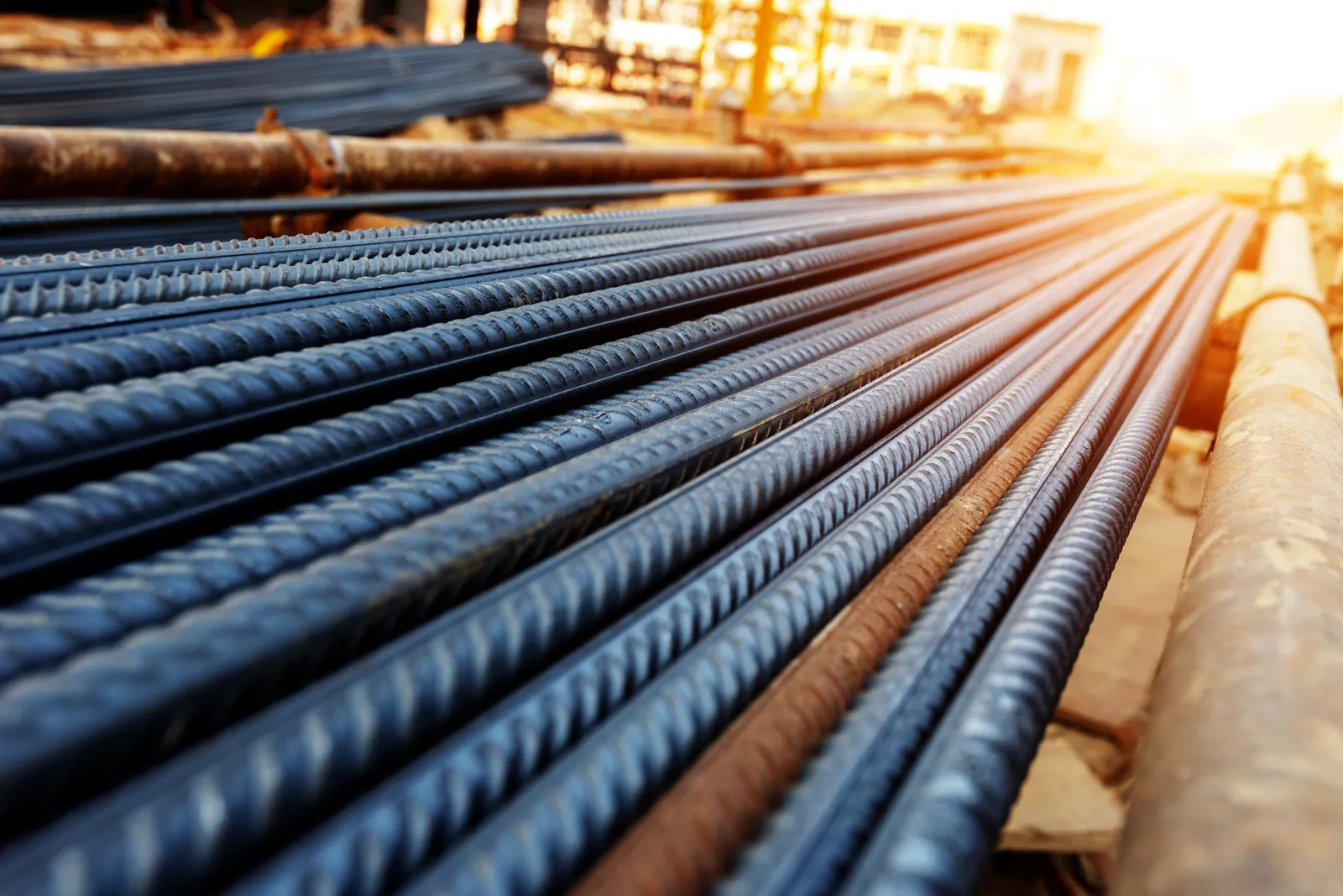
On most construction projects in Europe, reinforcing steel is specified as B500B or B500C. Both grades have the same characteristic yield strength of 500 MPa, so on a drawing they can look interchangeable. They are not: the letter after the number describes the ductility class, which determines how the reinforcement behaves when a structure is loaded beyond its elastic limit.
What the ductility classes mean
Eurocode 2 (EN 1992-1-1, Annex C) defines three ductility classes based on two properties: the characteristic strain at maximum force (εuk) and the ratio of tensile strength to yield strength (k).
| Class | Minimum εuk | k = ft/fy |
|---|---|---|
| A | 2.5% | ≥ 1.05 |
| B | 5.0% | ≥ 1.08 |
| C | 7.5% | ≥ 1.15 and < 1.35 |
Class A is typically cold-worked steel used in welded mesh. Class B is the standard hot-rolled bar for buildings and civil engineering works. Class C combines the highest elongation with a controlled hardening ratio, allowing plastic hinges to form and loads to be redistributed.
When is Class C required?
The structural engineer decides. Class C is specified where high ductility is part of the design concept: structures designed for earthquake resistance under Eurocode 8, certain bridges and infrastructure works, and designs relying on significant moment redistribution. For most buildings in Belgium, the Netherlands and Germany, B500B remains the reference grade.
Can one grade replace the other?
Supplying B500C where B500B is specified is generally acceptable structurally, subject to the engineer's approval. The reverse is not: B500B must never replace a B500C specification. Any substitution should be agreed in writing before shipment.
What to check on delivery
- Grade and ductility class on the bundle labels and on the inspection certificate, matching the order.
- The rolled-in mill identification and rib pattern, which identify the producer and the grade.
- An EN 10204 type 3.1 inspection certificate per heat, with chemical composition, yield and tensile strength, tensile/yield ratio and elongation.
- In Belgium, the BENOR mark (NBN A 24-301 and the related PTV requirements): voluntary, but widely requested in specifications and it simplifies acceptance on site.
Looking ahead
The second generation of Eurocodes is being introduced across Europe, and national standards bodies must withdraw the first-generation parts by 30 March 2028. It is worth confirming which edition of EN 1992-1-1 applies to each contract.
Axel Global Trading supplies B500B and B500C reinforcing steel in bars and coils with full mill documentation. Our steel team can review your specification before quotation.
Related: Billets, Slabs and Rebars →
Sources
This article is for general information and does not replace the applicable standards, legislation or professional advice for a specific project.